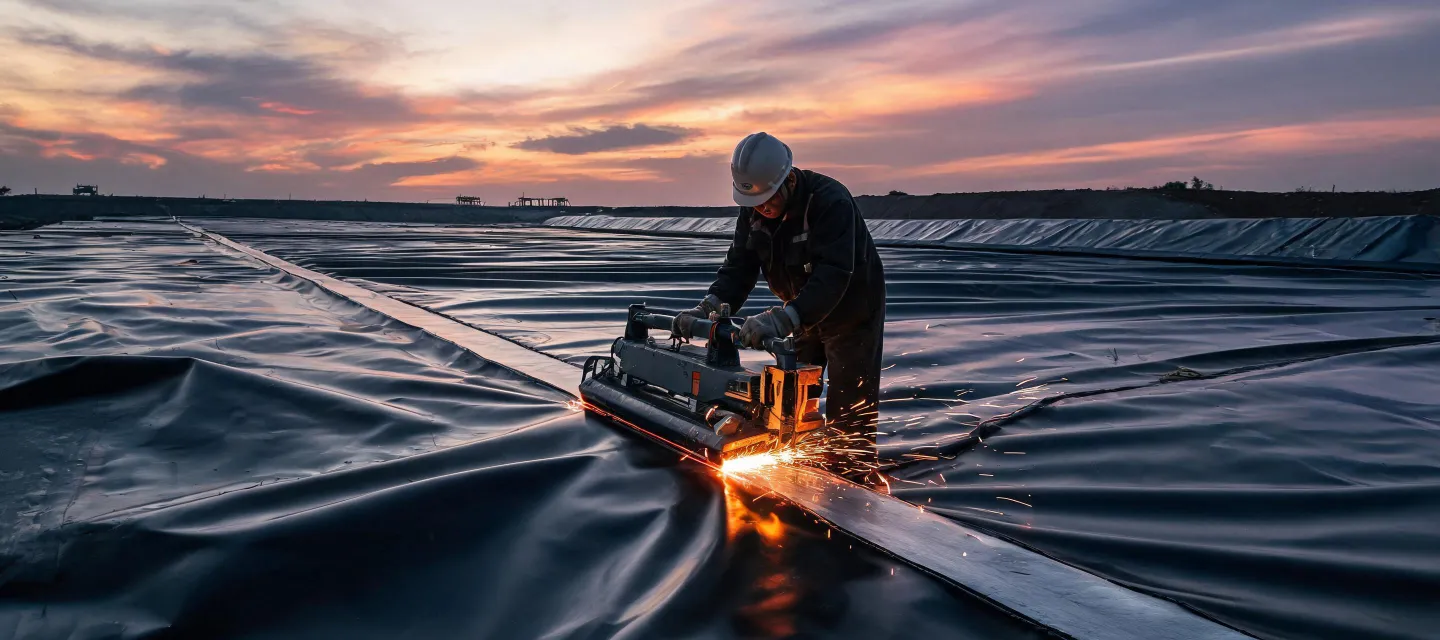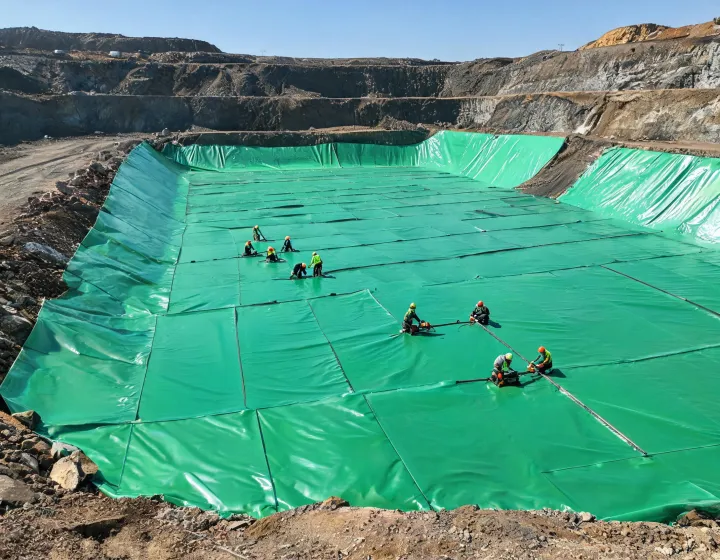
Mining & heap leach
Process solution pads and ponds needing chemical resistance with documented compressive strength under ore loads.
Polymer-engineered HDPE liners and geosynthetic assemblies that protect groundwater, process solutions, and critical infrastructure where UV stability, puncture resistance, and dimensional stability decide project risk.
Engineered performance
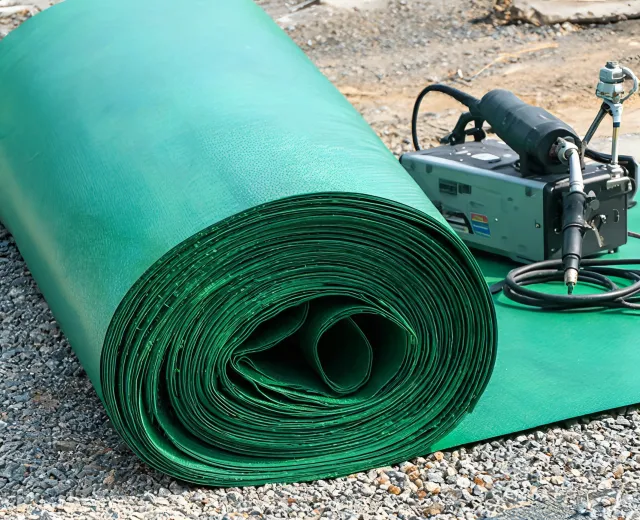
Solmax designs geomembranes around measurable field stresses—not brochure adjectives—so specification teams can defend liner selection against chemical exposure, slope stability, and long service life expectancy targets.
Stabilizer packages maintain tensile retention on exposed faces where temporary cover schedules slip and solar load accelerates aging.
Formulations balance flexibility with impact resistance so subgrade angularities and equipment traffic do not open leakage pathways.
Controlled shrinkage behavior reduces seam stress during day-night cycles on large basins and landfill cells.
Low permeability pathways keep process solutions and leachate where hydraulic models expect them to stay.
Interface shear and cushioning guidance help designers pair liners with drainage geocomposites under high normal stress.
Specification clarity
Switch between thickness, chemical, and installation tabs to align geomembrane selection with project manuals that already cite compressive strength, UV stability, and warranty period expectations.
| Parameter | Smooth HDPE | Textured HDPE |
|---|---|---|
| Typical thickness range | 1.0–2.5 mm | 1.5–2.5 mm |
| Tensile yield (ASTM D6693) | ≥ 15 N/mm | ≥ 15 N/mm |
| Puncture resistance | High | High + interface grip |
| Service life expectancy target | 20–50+ years* | 20–50+ years* |
*Project-specific; depends on chemical exposure, cover conditions, and UV exposure duration.
| Parameter | Mining / process | Municipal landfill |
|---|---|---|
| Primary barrier polymer | HDPE | HDPE |
| Moisture vapor transmission | Ultra-low | Ultra-low |
| Recycled content percentage options | Project-qualified | Project-qualified |
| Embodied carbon documentation | Available on request | Available on request |
| Parameter | Guidance | Why it matters |
|---|---|---|
| Welding window | Ambient & sheet temperature checks | Seam integrity under thermal swing |
| Subgrade prep | Angular stone cushioning plan | Impact resistance margin |
| QC seam testing | Air channel / vacuum box protocol | Leak path prevention |
| Warranty period packaging | Project-defined with TDS | Owner risk allocation |
Where liners earn their keep
From heap leach pads to potable water reservoirs, Solmax materials are specified when leakage, UV aging, or slope interface failure would halt operations.
Compliance evidence
Quality and environmental systems accompany every Solmax manufacturing lot so owner engineers can attach third-party proofs without rewriting procurement language.
Quality management across extrusion, testing, and lot release documentation.
Environmental management for resin handling and plant energy intensity tracking.

Reporting frameworks that support owner ESG questionnaires on recycled content percentage and embodied carbon.
Potable-water contact pathway for selected geomembrane constructions used in reservoirs.
Scale with accountability
In 2024 field audits across Latin American heap leach expansions, Solmax technical teams logged subgrade cushioning revisions that cut puncture risk before ore stacking began—evidence that specification support must happen before welding crews mobilize.